
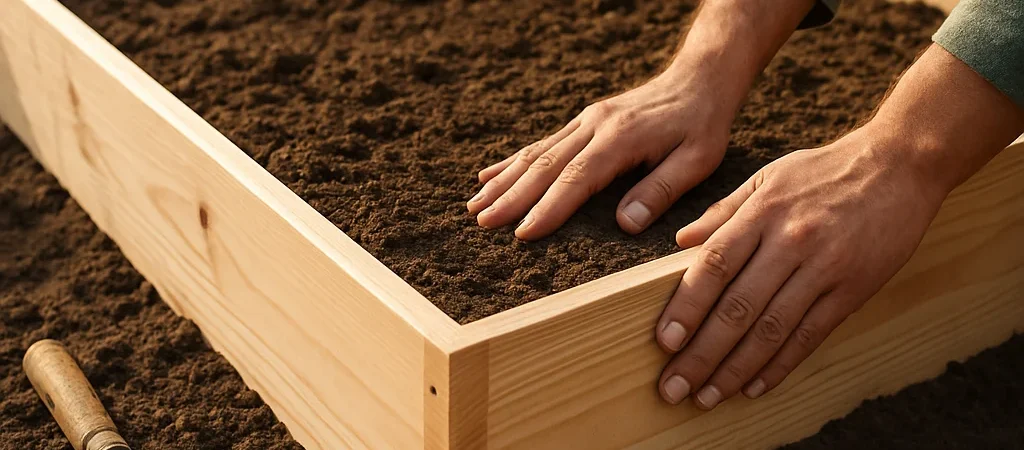
A new raised bed can look ready for soil long before you know what it needs. The key questions are what you plan to grow, how deep its roots may reach, and whether the bed will sit over open ground or a hard surface.
Start With the Site
Watch the proposed spot through the day before setting the frame in place. Note how much direct sun it gets, where rainwater collects, and whether a nearby fence or tree will shade it as the season changes. If the bed sits over soil, loosening the ground below can help roots explore beyond the frame.
Match Depth to the Crop
Leafy greens and many herbs can grow in a shallower bed than crops with larger root systems, such as carrots. A deeper frame is useful when the native soil is compacted or the bed must sit over pavement, but it also takes more filling material. Choose a depth for the plants and site you actually have, rather than assuming every bed needs the same dimensions.
Fill for a Living Bed
Use a blend intended for growing plants, not a bed of pure compost or a layer of coarse material meant to replace soil. Compost can contribute organic matter, but it works best as part of a balanced growing mix. Before planting, water the filled bed and check whether the surface settles enough to need topping up.