
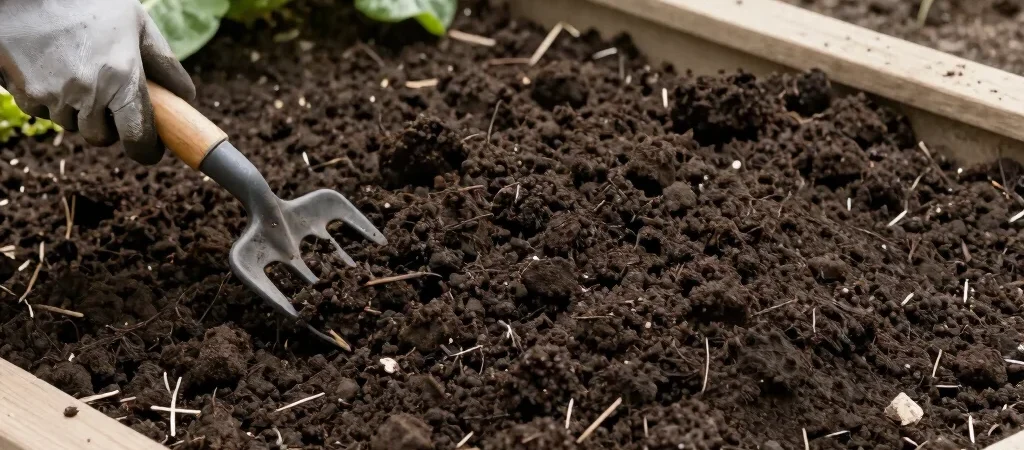
When a vegetable bed struggles, compost is an easy thing to reach for. It can add organic matter and support soil structure, but it cannot correct every problem on its own. Start by noticing what the soil is doing before deciding what to add.
Look Beyond the Surface
A crusted surface, standing water, or soil that dries unusually fast can point to different conditions, even if each bed looks simply 'tired.' Dig a small test hole and examine the soil below the top layer; notice whether it is compacted, very sandy, or holding moisture. Also check how the bed drains after a thorough watering.
Use Compost as an Amendment
Spread finished compost over the bed and work it gently into the upper layer, taking care not to disturb established plant roots. For a new bed, blend it with suitable growing soil rather than filling the entire frame with compost. The goal is to improve the growing environment, not to make the soil as rich as possible.
Keep the Response Specific
If plants still look weak after you amend the soil, pause before adding another layer. Check watering consistency, light, drainage, and signs of pests or disease; each can affect growth in ways compost will not resolve. A small, deliberate change followed by observation usually tells you more than treating every bed the same way.